5 Signs Your Retaining Wall Is Failing (And What to Do About It)
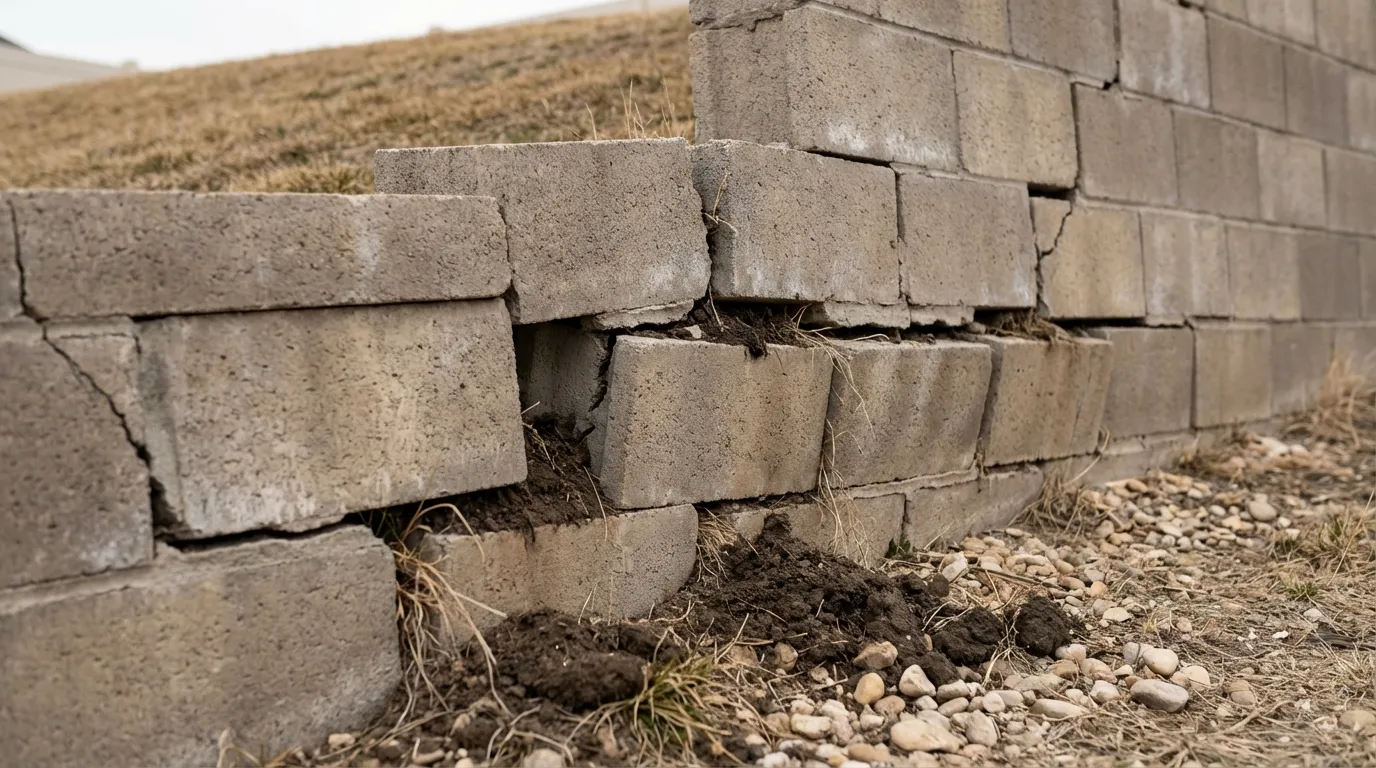
A retaining wall is a structural element holding back thousands of pounds of soil. When one starts to fail, it doesn’t happen overnight — but the warning signs are often ignored until the problem becomes expensive or dangerous.
Here are the five signs that your retaining wall needs attention, and what to do about each one.
1. The Wall Is Leaning or Tilting
What you’ll see: The wall face is no longer vertical — it’s tilting outward, away from the soil it’s retaining. You might notice it most at the top of the wall, where a gap appears between the wall and the ground behind it.
Why it happens: Hydrostatic pressure from water-saturated soil behind the wall pushes it outward. This is especially common in Utah after spring snowmelt when clay soils become fully saturated. Inadequate drainage is almost always the root cause.
How serious is it? Very. A leaning wall is actively failing. The further it tilts, the faster it accelerates — the weight of the soil gains mechanical advantage as the wall moves.
What to do: If the lean is minor (less than 1 inch over the wall height), reinforcement with tiebacks or soil anchors may save the wall. Significant leaning usually means the wall needs to be rebuilt with proper drainage.
2. Visible Cracking
What you’ll see: Cracks running through the wall face — either horizontal, vertical, or stair-stepped along mortar joints. Small hairline cracks may appear first, then widen over time.
Why it happens: Several causes are common in northern Utah:
- Freeze-thaw cycles — Water enters small cracks, freezes, expands, and widens them. This is the most common cause along the Wasatch Front.
- Soil movement — Utah’s expansive clay swells when wet and shrinks when dry, creating uneven pressure on the wall
- Foundation settling — If the footing wasn’t placed on stable, compacted soil or below the frost line
- Overloading — A new driveway, structure, or landscape feature added above the wall after construction
How serious is it? It depends on the crack pattern. Hairline cracks from normal settling are cosmetic. Widening cracks, stair-step patterns, or horizontal cracks near the base indicate structural failure.
What to do: Monitor cracks by marking their ends with a pencil and dating them. If they’re growing, call a retaining wall repair specialist. Structural cracks need professional assessment.
3. Bulging in the Wall Face
What you’ll see: A section of the wall bows outward, creating a visible bulge. The wall may look wavy instead of straight when viewed from the side.
Why it happens: Localized pressure from a concentrated water source behind the wall — often a downspout, irrigation line, or underground spring hitting one section harder than others. Poor backfill compaction can also cause localized bulging.
How serious is it? A bulge means that section of wall is being pushed past its structural capacity. It’s a precursor to collapse in that area.
What to do: This usually requires rebuilding the affected section. The good news is that localized bulges can often be repaired without replacing the entire wall — but the drainage issue behind it must be fixed, or the new section will fail the same way.
4. Drainage Problems
What you’ll see: Water pooling at the base of the wall, seeping through the wall face in unexpected places, or saturated soil at the top of the wall that never seems to dry out. You might also notice efflorescence (white mineral deposits) on block or concrete walls.
Why it happens: The drainage system behind the wall has failed or was never installed properly. This is the single most common cause of retaining wall failure in Utah. Our clay soils hold water tenaciously, and without a clear drainage path, hydrostatic pressure builds until something gives.
How serious is it? Drainage problems are the root cause of most other failure signs on this list. If your wall has drainage issues, the other problems will follow.
What to do: In some cases, drainage can be improved without rebuilding the wall by:
- Installing weep holes to relieve pressure
- Adding a French drain at the base
- Redirecting surface water away from the wall
- Fixing gutters and downspouts that discharge near the wall
For severe drainage failure, the wall may need to be partially dismantled to install proper drainage solutions behind it.
5. Soil Erosion Behind or Under the Wall
What you’ll see: The ground behind the wall is sinking, pulling away, or developing voids. You might see gaps forming between the soil and the back of the wall, or notice that the grade behind the wall has dropped over time. Soil washing out at the base of the wall is another clear sign.
Why it happens: Water moving through or under the wall carries soil particles with it — a process called piping. Once it starts, it creates channels that accelerate erosion. Erosion behind a retaining wall undermines the very soil the wall is designed to hold.
How serious is it? Erosion creates voids that remove support from behind and beneath the wall. It’s a progressive failure — each rain event makes it worse.
What to do: Address immediately. The erosion channels need to be filled, proper filter fabric installed, and drainage corrected. If the foundation has been undermined, the wall likely needs to be rebuilt on a new footing.
When to Repair vs. Replace
Not every failing wall needs complete replacement. Here’s a general guide:
Repair may be sufficient when:
- Damage is localized to one section
- The foundation is still solid and level
- Cracks are minor and not structural
- The wall is leaning less than 1 inch
- Adding drainage can address the root cause
Replacement is necessary when:
- The wall is leaning significantly (more than 2 inches)
- The foundation has shifted or settled unevenly
- Multiple failure signs are present simultaneously
- The wall was built without proper drainage originally
- Structural cracks extend through the foundation
Frequently Asked Questions
How long should a retaining wall last?
A properly built retaining wall with adequate drainage should last 50-75+ years. If your wall is failing after just 5-10 years, it likely has a construction or drainage deficiency that needs to be addressed — not just patched.
Is a failing retaining wall dangerous?
Yes. A collapsed retaining wall releases tons of soil and can damage structures, vehicles, or landscaping downhill. If your wall shows multiple warning signs, keep people and vehicles away from the downhill side and get a professional assessment.
Can I fix a failing retaining wall myself?
Minor cosmetic repairs are DIY-friendly, but structural issues require professional assessment and equipment. Improper repairs can accelerate failure and make the eventual rebuild more expensive.
Does homeowner’s insurance cover retaining wall failure?
Most homeowner’s policies cover sudden damage (like a wall collapsing due to a storm) but not gradual deterioration or poor construction. Check your policy and document any warning signs with photos and dates.
Concerned about your retaining wall? Ogden Rock Walls offers free inspections throughout Weber, Davis, and Box Elder counties. We’ll assess your wall honestly and recommend the most cost-effective solution — whether that’s a targeted repair or a full rebuild. Call (385) 312-0606 or schedule an inspection.